
Friday Fabric Facts #14: Fabric Partners Aren’t Competitors – They’re Your Data Multiplier
Friday Fabric Facts #14 Fabric Partners Aren’t Competitors – They’re Your Data Multiplier The Executive Insight Fabric is not a […]

Friday Fabric Facts #14 Fabric Partners Aren’t Competitors – They’re Your Data Multiplier The Executive Insight Fabric is not a […]
Friday Fabric Facts #13 Fabric Isn’t Expensive. Undisciplined Workloads Are. The Executive Insight By the time Fabric shows up in
Friday Fabric Facts #12 Real-Time Intelligence Isn’t for Your Dashboard Refresh – It’s for When Seconds Matter The Executive Insight
Friday Fabric Facts #11 Your Real Bottleneck Isn’t ETL Anymore – It’s “Where Do I Find the Good Stuff?” The
Friday Fabric Facts #10 Your Fabric Isn’t ‘Live’ Until Your Changes Survive Their First Friday The Executive Insight Most teams
Friday Fabric Facts #9 Your Lake Is Not a Product: Fabric Wants You to Think in Domains The Executive Insight
Microsoft Fabric and Google BigQuery are both cloud analytics platforms, but in different ecosystems. Fabric is a unified, Microsoft-integrated SaaS platform. BigQuery is Google Cloud serverless warehouse for massive-scale SQL. The right choice depends on where your stack lives and how you consume compute.
Any migration from one business intelligence software to another involves a structured transition from isolated data preparation to a unified analytics ecosystem. By auditing existing workflows and mapping logic to modern dataflows, organizations can eliminate redundant processes and reduce licensing overhead. This shift ensures that data remains accessible and actionable for every stakeholder.
Determining the total cost of a migration to Microsoft Fabric involves looking at more than just the monthly subscription fees for cloud capacity. Most businesses should plan for an initial investment that covers licensing, data engineering labor, and the decommissioning of legacy data warehouse tools.
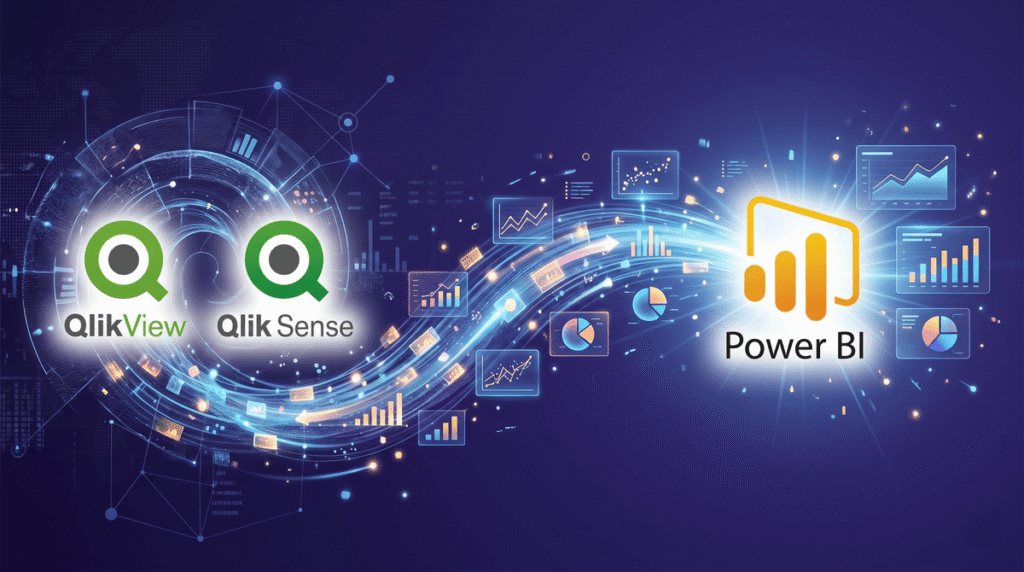
Migrating from legacy Qlik environments to a modern Microsoft ecosystem requires a calculated strategy centered on report rationalization and semantic modeling. Lean IT teams must prioritize high-value assets rather than attempting a lift-and-shift of every old dashboard, ensuring that resources focus on ROI.